
0
My Basket
Warning
Cookies are used on this site to provide the best user experience and are used for ads personalisation. See our Privacy Policy to understand how they are used.
If you continue, we assume that you agree to receive cookies from this site. OK
If you continue, we assume that you agree to receive cookies from this site. OK
Established in 2005 (UK)
HD Recorders
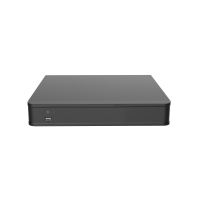
Our range of Digital Video Recorders (DVRs) support HD cameras and traditional analogue cameras. DVRs are connected via standard RG59 coaxial or CAT5 cabling infrastructures. Our range of DVRs support motion triggered & continuous recording, local viewing to PC/TV monitors and viewing over a network using smartphones, tablets and PCs. All of our DVRs are hybrid (supporting AHD/TVI/CVI/CVBS/IP).
Terms & Conditions
About us
- DDS (Digital Direct Security)
Unit 7 Osprey Court
Hinchingbrooke Business Park
Huntingdon, PE29 6FN - 01480 459809
- sales@digitaldirectsecurity.co.uk
- View on map
© 2005-2025 DDS (Digital Direct Security) Ltd.